




Why not just use Claude?
You already use Claude. So does everyone you compete with. What it can't do is remember what your customers said last quarter, count how often they said it, or tell you when you're fooling yourself. That gap is what Krans fills, inside the Claude you already have.
"Why not just use Claude?"
The honest answer starts with: do. We run most of our own work through Claude and Claude Code. Drop a transcript in and it tells you what happened on Tuesday's call better than most people who were on it.
Then ask it something bigger. Whether the thing you believe about your market is backed by what buyers said, or by hope. Whether seven companies have quietly told you the same thing this quarter. Who, on the deal you need to close, still hasn't said a word about budget. That's where a chat runs out, and where your Monday starts with rebuilding the picture by hand.
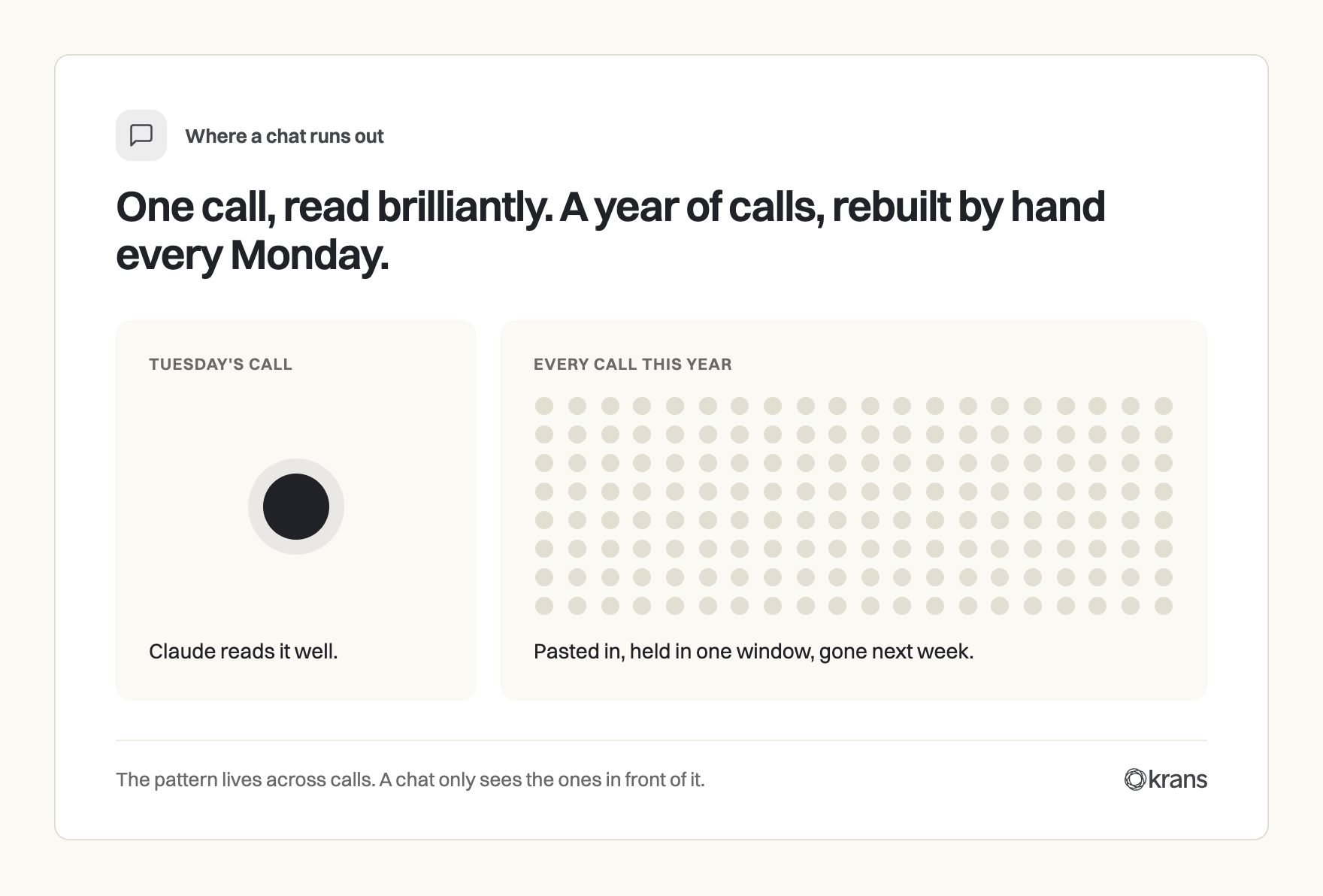
Can Claude analyse all our sales calls?
One call, brilliantly. A year of calls, not reliably. A chat works from what you put in front of it today, so the pattern across two years of customer conversations has to be pasted in, held in one window and rebuilt next week. Four things go missing on the way.
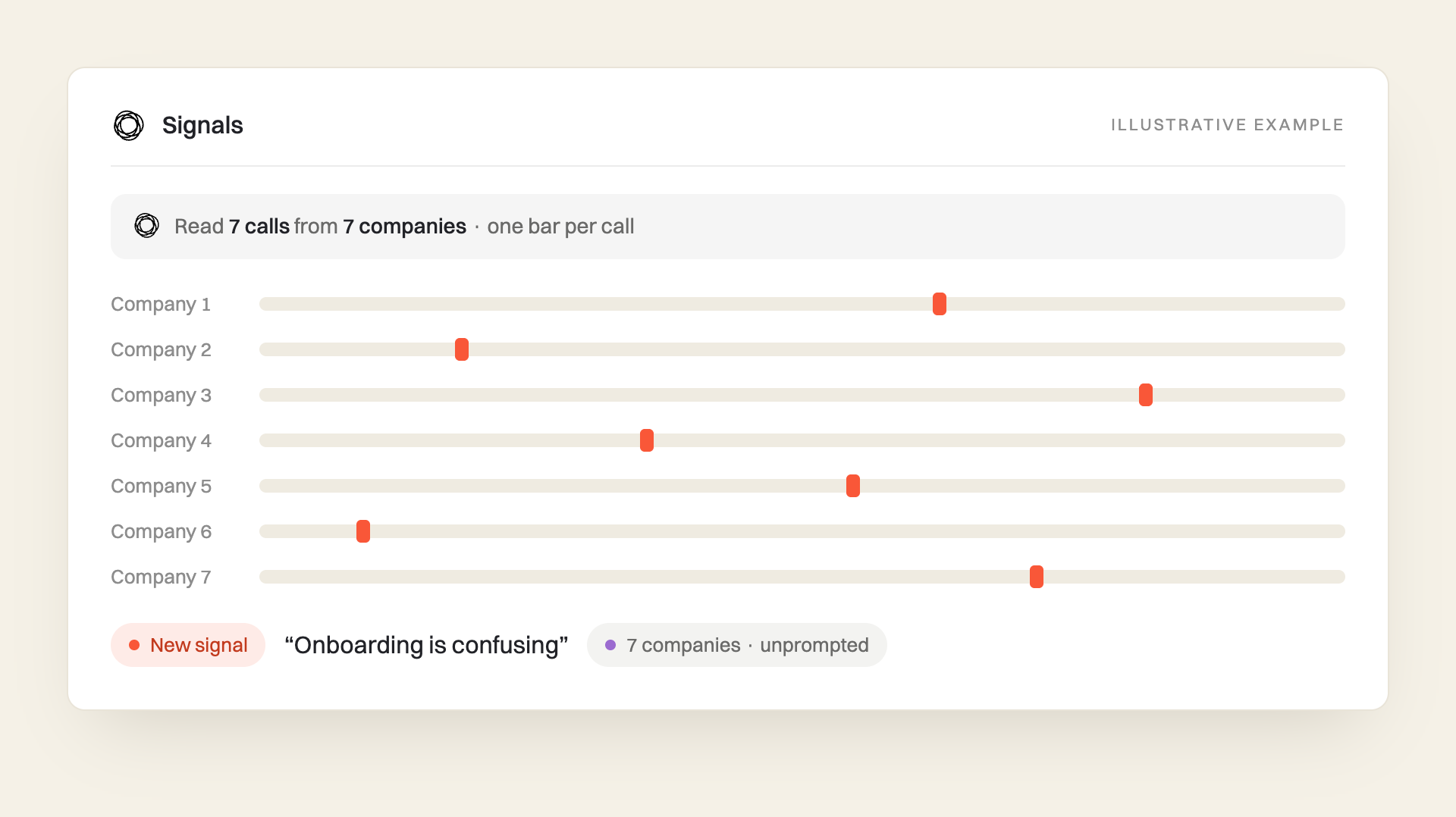
It doesn't count. A summary gives every remark the same weight. One buyer calling your onboarding confusing is a bad day. Seven companies saying it unprompted is a fact about your product. Krans breaks every call into single learnings tied to who said it and when, and the same thing heard across different companies hardens into a signal.
It doesn't grade. A passing compliment and a signed pilot read the same in a transcript. In Krans every learning carries a grade from E0, inferred and never said out loud, to E5, somebody put something at stake. Six months later the grade is still there.
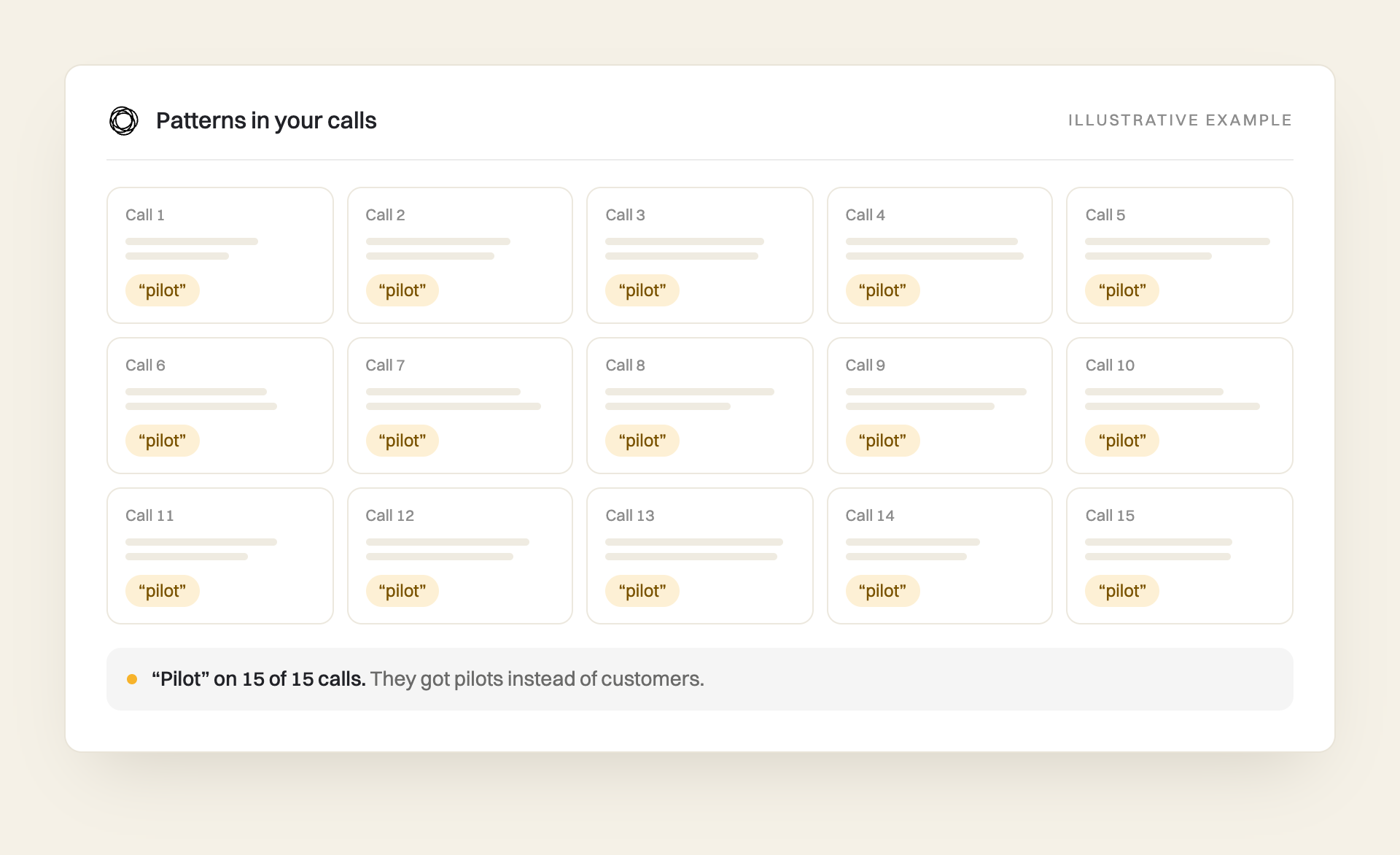
It agrees with you. Ask Claude whether your pricing works and it will find reasons it does. It's built to help the person typing, who is usually the one hoping the idea works. Krans doesn't move a grade because you'd like it to. A studio operator told us what stopped him: his team had said "pilot" on fifteen calls in a row, which is exactly why they kept getting pilots instead of customers. Nobody on those calls could hear it.
It can't see what's missing. A model summarises what you gave it. The useful question before your next call is the opposite: what haven't we heard yet? Krans knows which questions a team already has answers to, so it can tell you the one you don't. Who signs off on the budget, say.
Doesn't Claude Projects or memory already do this?
Partly, and both are worth using. A Claude Project holds the files you upload, and on Team and Enterprise plans you can share it with colleagues. Memory carries context from one of your chats to the next.
What neither does is keep the record for you. Someone still has to export the transcripts, upload them and keep them current. When the files grow past what fits, Claude pulls the passages that look relevant to your question, which is fine for a lookup and not the same as counting every mention. Memory is personal: what Claude learned in your chats isn't what it learned in your colleague's.
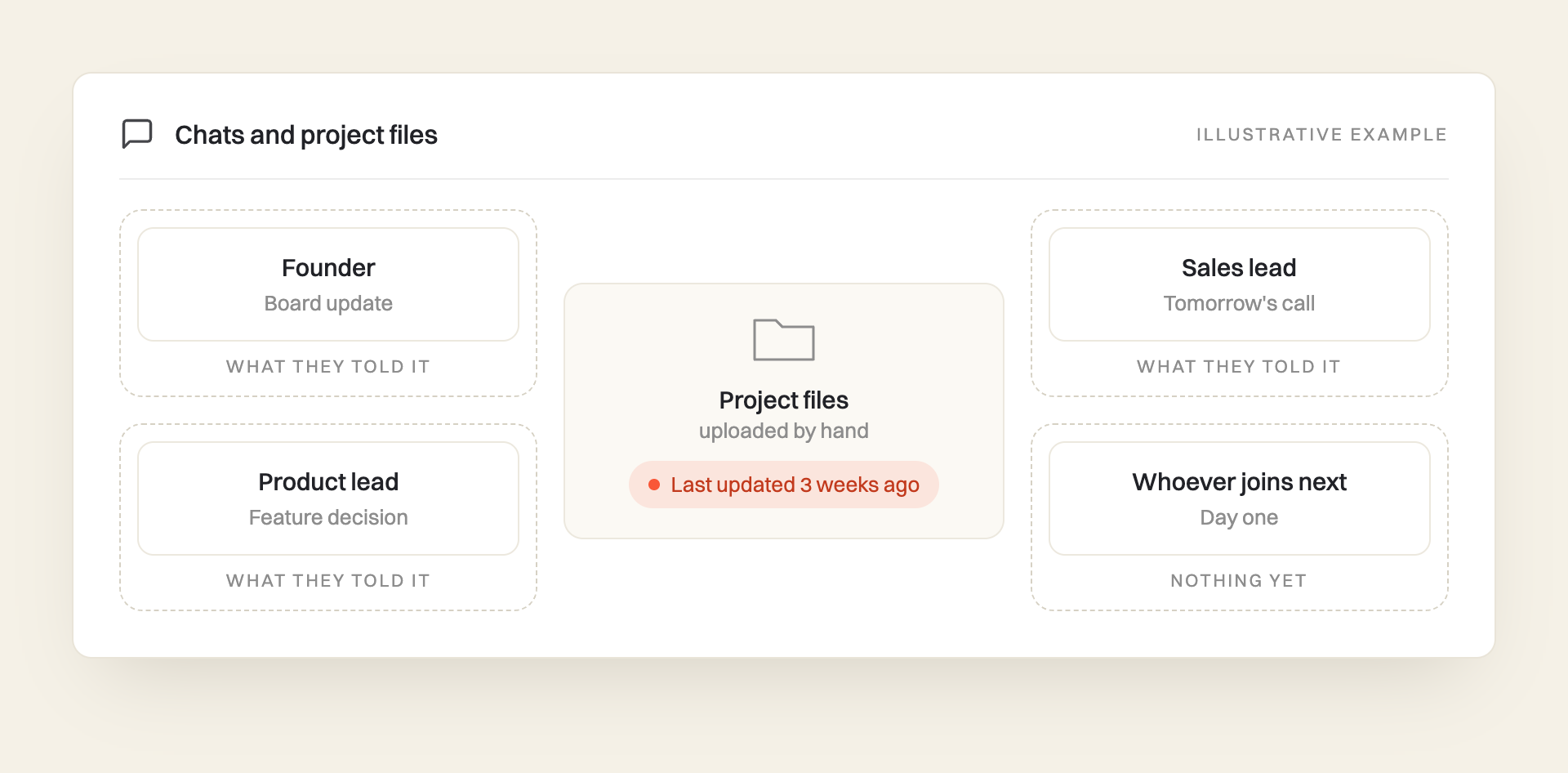
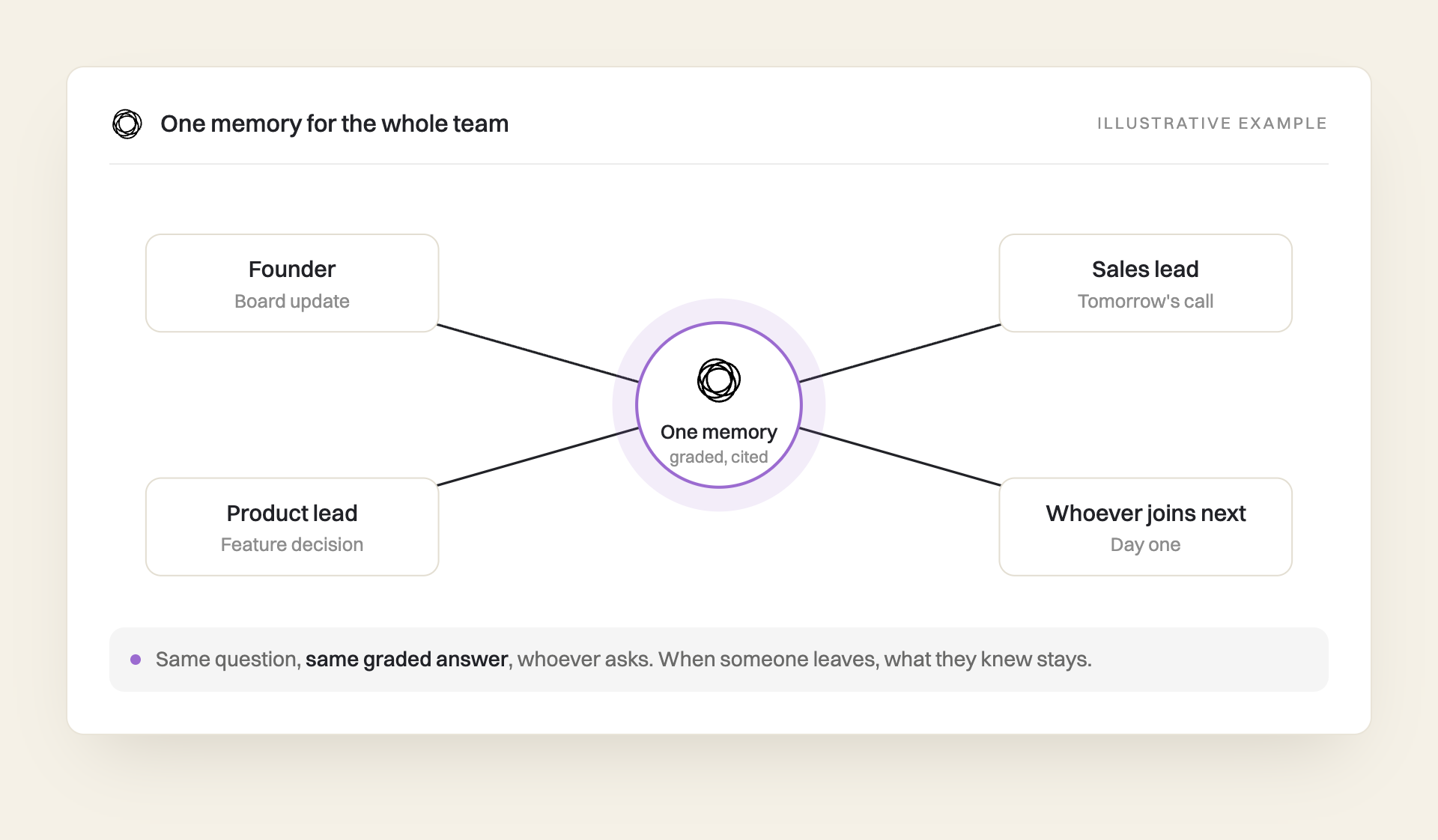
Krans is one memory for the whole team. Calls, emails and documents flow in on their own. The founder writing the board update, the sales lead preparing tomorrow's call and the product lead deciding on a feature all ask the same graded record and get the same answer. When someone leaves, what they knew stays.
Can't we build this ourselves?
You can build the first week. A venture partner told us, kindly, that he could probably do it in a week in Claude, and he's right. Most teams we speak to already drop transcripts into Claude, Notion or a shared drive, and it gets them a good answer about one call at a time.
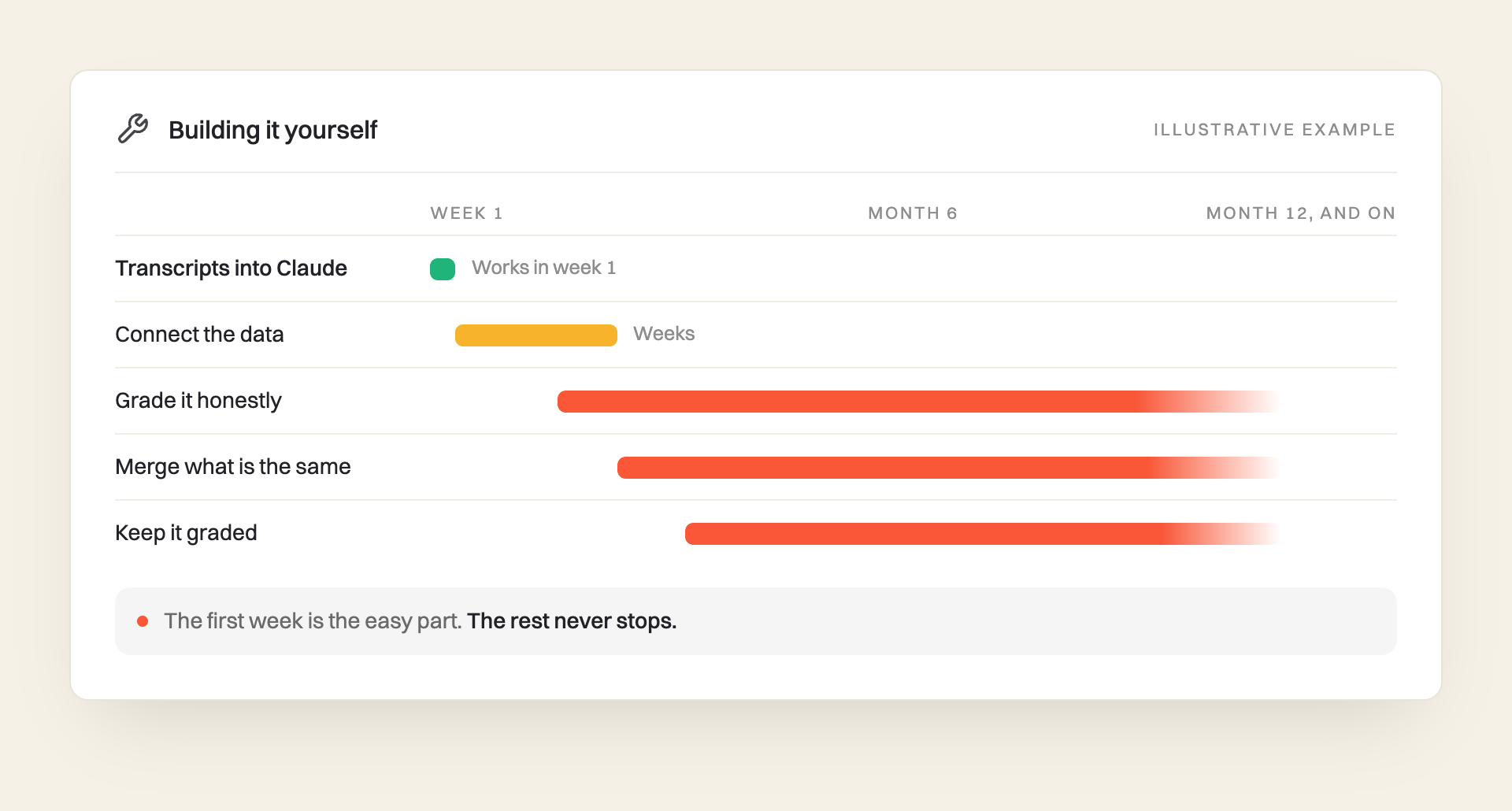
We know the pull, because we did it. Our first version ran on top of other tools too. Connecting the data took weeks. Grading it honestly, merging what's the same and keeping it graded month after month is what we've spent the year since on, and we still work on it every week. Most teams would rather spend that year on their own product.
Isn't this just another note-taker or CRM?
No. A note-taker remembers a call. Several now connect to Claude as well, which gets you transcripts and summaries of their own recordings. A CRM holds what someone remembered to type.
Krans sits a level up. It reads the calls from whichever recorder you use, plus email, Notion and your documents, and keeps what they add up to: which bets are backed, which are fading, what was decided and on what evidence. Studios told us the same thing in different words: they want a brain for the company, not another CRM to keep updated.
What happens to a call in Krans?
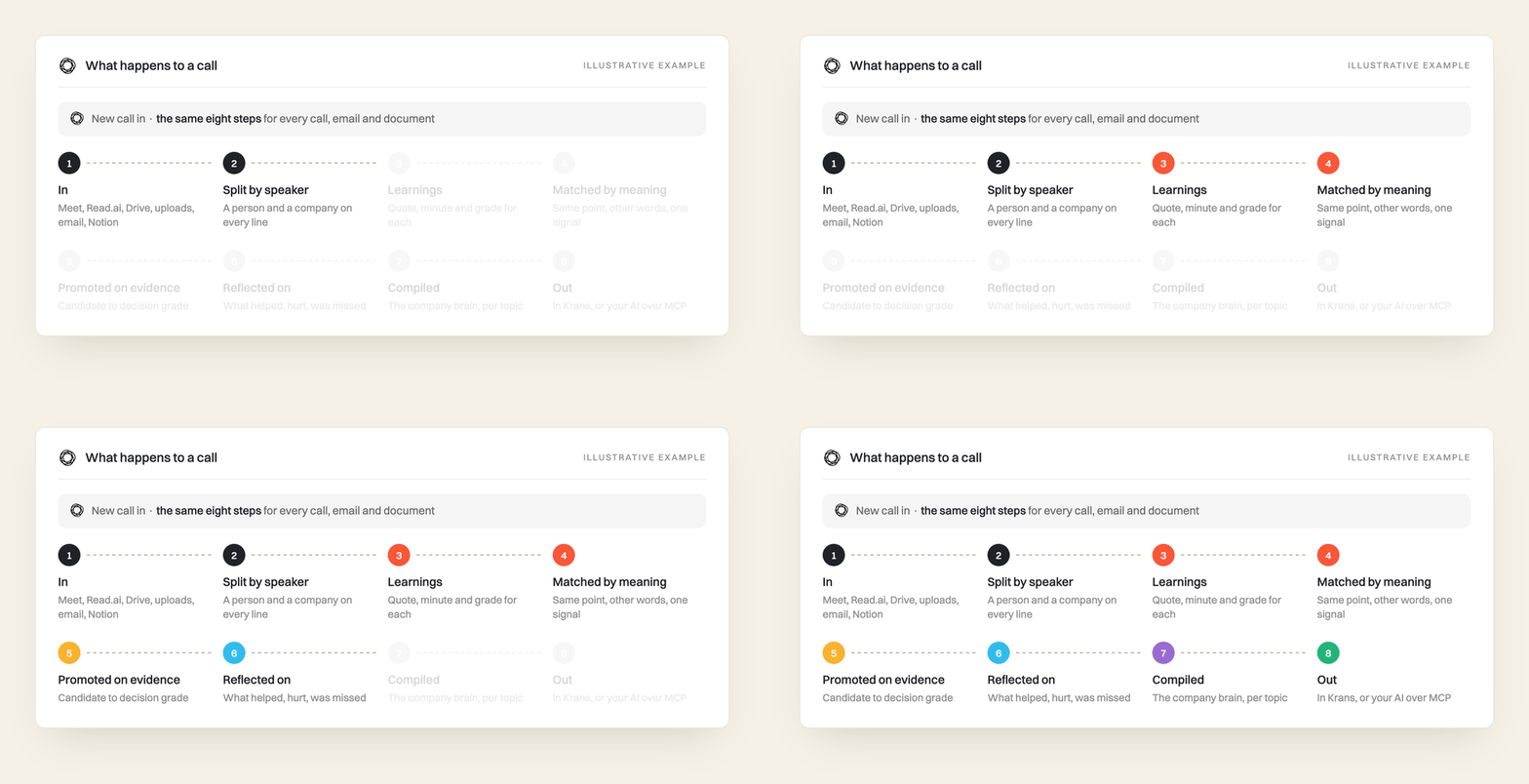
The same eight steps, for every call, email and document:
- In. Calls come in from Google Meet, Read.ai, Drive or an upload, next to email, Notion and your documents. Nobody types anything.
- Transcribed and split by speaker. Krans works out who spoke and which company they're from, so every line has a person and an account behind it.
- Broken into learnings. A pain, an objection, a buying signal, a request. Each one keeps the quote, the speaker, the minute it was said and its grade from E0 to E5.
- Matched by meaning. Every new learning is compared with everything said before, by what it means rather than the words used. The same point from different companies joins one signal.
- Promoted on evidence only. A signal moves from candidate to emerging to validated to decision grade as more companies and stronger evidence back it. One loud person doesn't move it.
- Reflected on. Each call also gets its own read: what helped, what hurt and what was missed.
- Compiled. All of it adds up to the company brain: what you know per company and per part of the business, refreshed as new calls land.
- Out. You read it in Krans, or from Claude, Cursor or ChatGPT over MCP, read only, with the source behind every answer.
Do we have to stop using Claude?
No, and the teams who get the most out of Krans don't. They run it from inside Claude. Krans connects to Claude, Cursor and ChatGPT over MCP, so the assistant a team already lives in can pull graded, cited evidence from Krans instead of guessing from whatever happens to be in the chat.
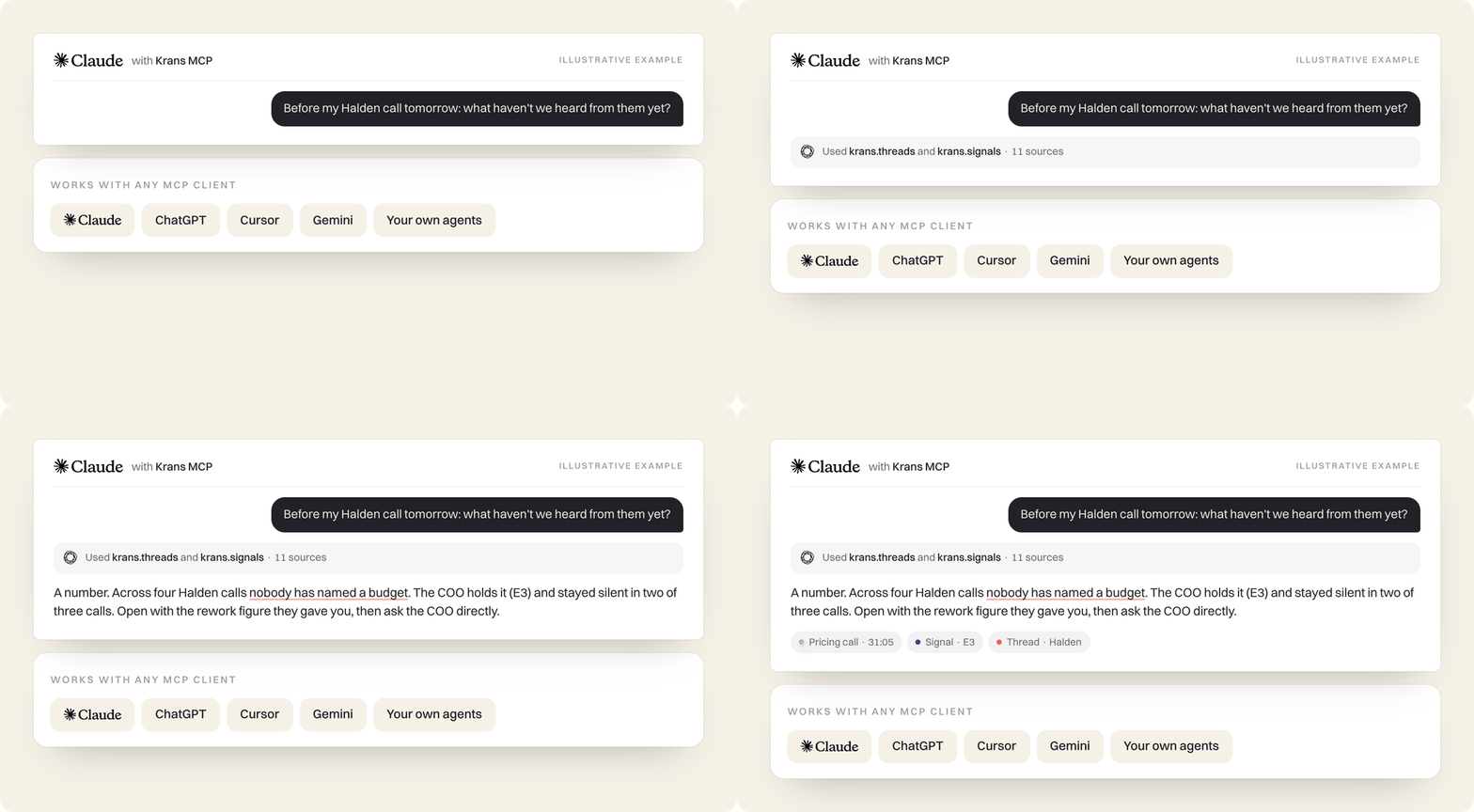
One venture builder told us on day one that he mostly lives in Claude. He connected Krans in the same call and now uses it to find the gaps in his interview script before the next round.
A corporate innovation team went further. They set a rule in Claude: anything it writes into their Notion has to rest on facts from Krans. Claude does the writing. Krans decides what's true enough to write down.
And a studio that had spent months on its own Claude setup ran the same question through both. Their verdict was that Krans was more precise. The models come from the same family. The difference was what sat underneath: a memory that had been kept, counted and graded, where their setup had a pile of text.
How many calls do we need?
A team with five calls gets a tidy summary. From a few dozen, Krans starts finding patterns nobody on the calls could hear, and it gets sharper every week it runs. Most teams who ask already have those calls sitting in a note-taker.
Why this matters more every month
Within a couple of years, almost everyone at work will do most of it through an assistant like Claude. The model will be the same for you and for your competitor, and it will keep getting better for both of you at the same speed. So the model stops being the difference.
The difference is what your AI knows about your company, and whether it tells you the truth about it. Most companies have all of that already, in the calls, the threads and the documents. It just isn't kept anywhere an AI can use. Your company already knows. It just can't remember it.
Still deciding between "we'll just use Claude" and "we'll build our own"? Book a walkthrough, bring a question you already asked Claude, and we'll put the same one to Krans while you watch.
Superpowers in this article
See what Krans reads in your own ventures.